A new report on university enabling programs across Australia highlights the first ever national, institution‑level analysis of participation rates stratified by equity group.
The report by the Australian Centre for Student Equity and Success (ACSES) found the share of equity students enrolling in enabling programs climbed to about 60%—a more than 10% increase—in the decade to 2023.
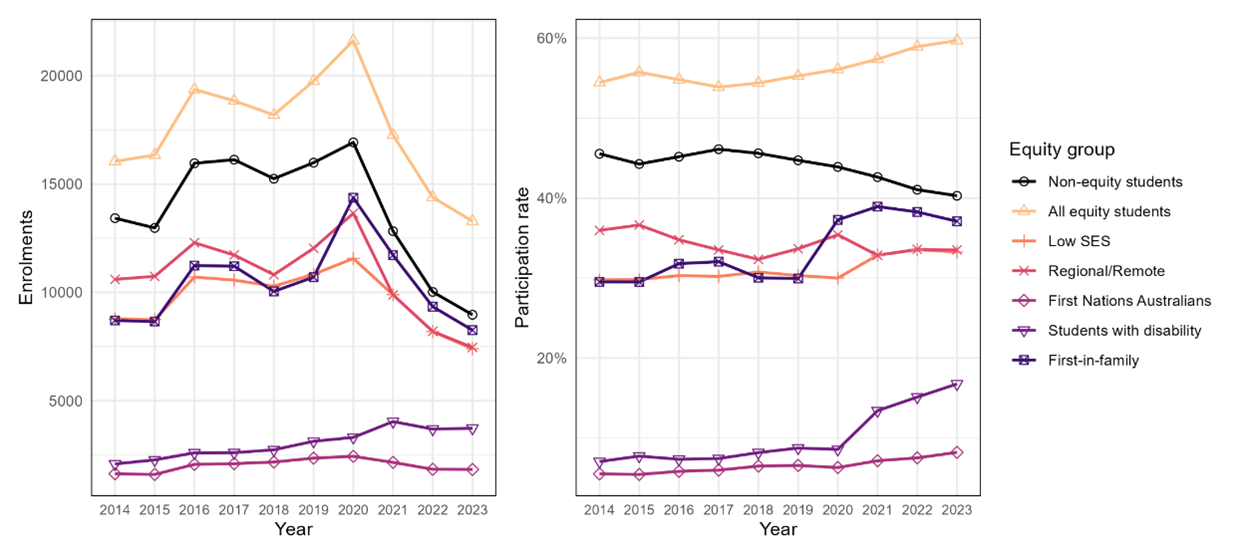
ACSES Senior Data Scientist David Raithel said this was evidence of the key role enabling programs play in widening higher education participation, particularly for equity students.
“For example, we know enabling programs are attracting substantial participation rates among students from regional and remote areas,” Mr Raithel said.
“This highlights their important role as an alternative entry pathway to university for people facing geographic and structural barriers to direct entry.”
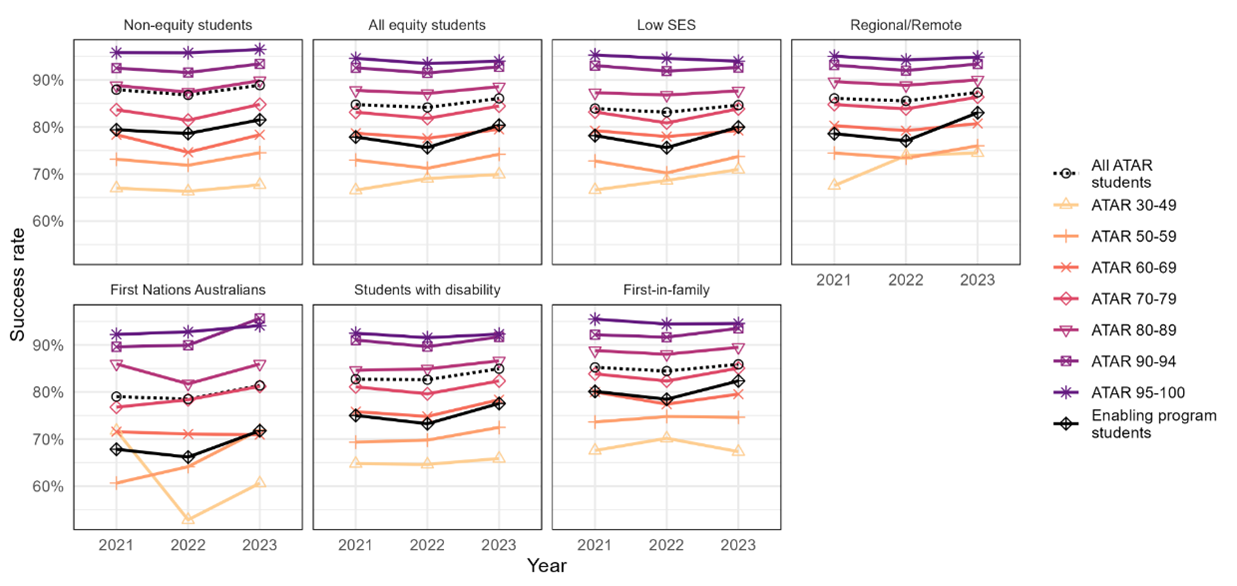
Drawing on recently released data, the report focuses on changes in enabling program participation rates from 2014 to 2023, first-year university retention rates from 2021 and 2022, and first-year university success rates from 2021 to 2023.
Overall, retention rates for equity students who entered university via enabling program pathways dropped between 2021 and 2022, while remaining relatively stable for non-equity students.
However, success rates for both equity and non-equity university students from enabling program pathways showed distinct upward trends in 2023.
Enabling programs also provide a vital alternative for Year 11 and 12 students who lack access to, or do not thrive in, Australian Tertiary Admission Rank (ATAR)-based pathways.
The report presents comparable evidence on retention and success outcomes for students entering university via enabling programs, benchmarked against ATAR pathways.
“Comparing equity students entering via enabling programs with equity students entering via ATAR provides a valuable pathway benchmark,” Mr Raithel said.
“Importantly, this helps us understand how enabling programs perform for specific equity groups, including students with disability, regional and remote students, students from low socio-economic backgrounds, and First Nations Australians.”
The full report, Enabling programs in Australian higher education, is now available on the ACSES website.