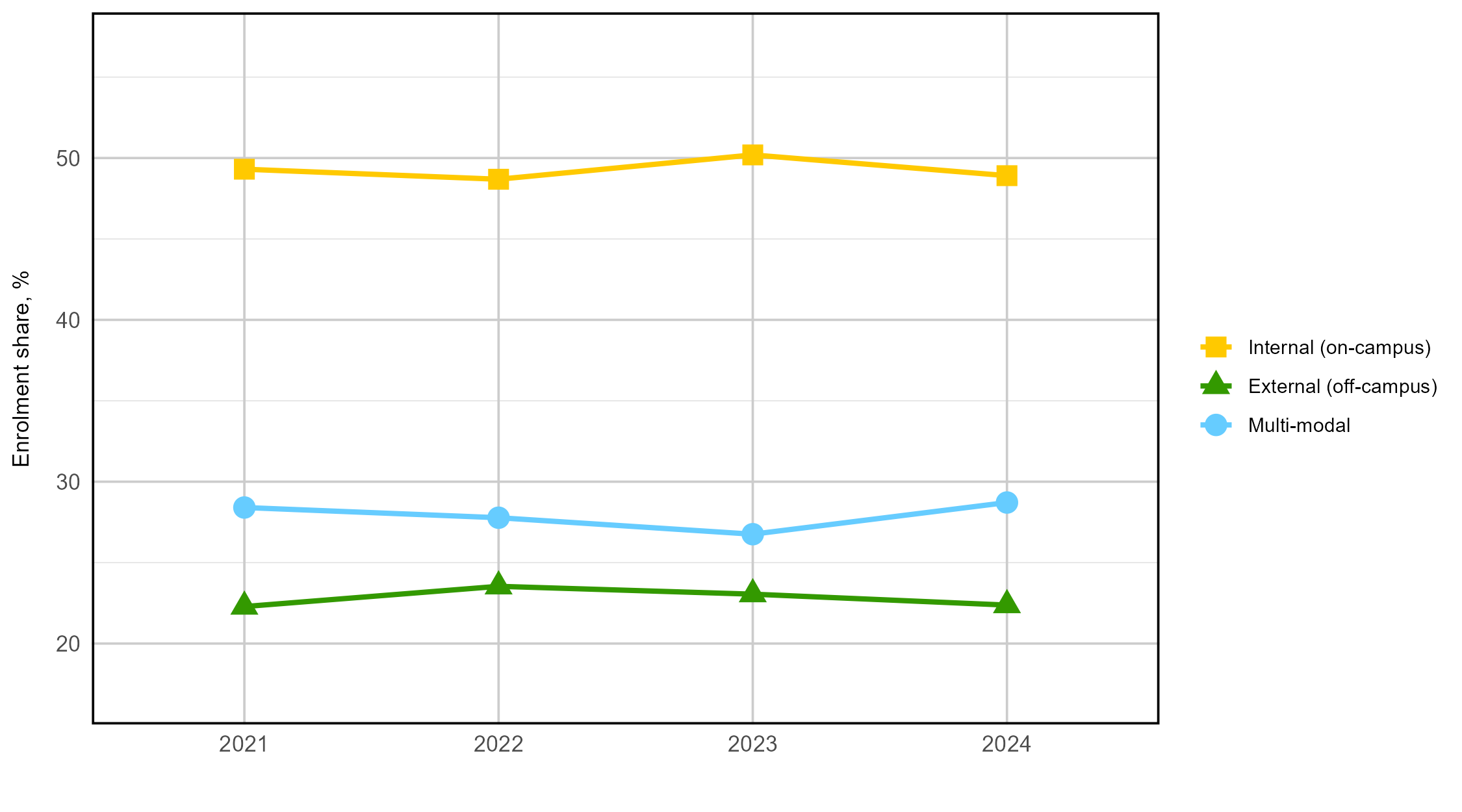
Enrolment patterns across Australia’s higher education sector have remained remarkably stable since 2021, a new report by the Australian Centre for Student Equity and Success (ACSES) has revealed.
The report—the latest in ACSES’s Data Insights Series—explored whether students were studying on-campus (internal), online (external), or through a mix of both (multi-modal), and how this varied across equity groups.
It found about half of domestic undergraduate students were studying internally and nearly a quarter externally, with the rest opting for a multi-modal approach.
Among the key equity groups, students from low socio-economic status areas, regional and remote areas, and First Nations Australian students were significantly more likely to study externally than their peers.
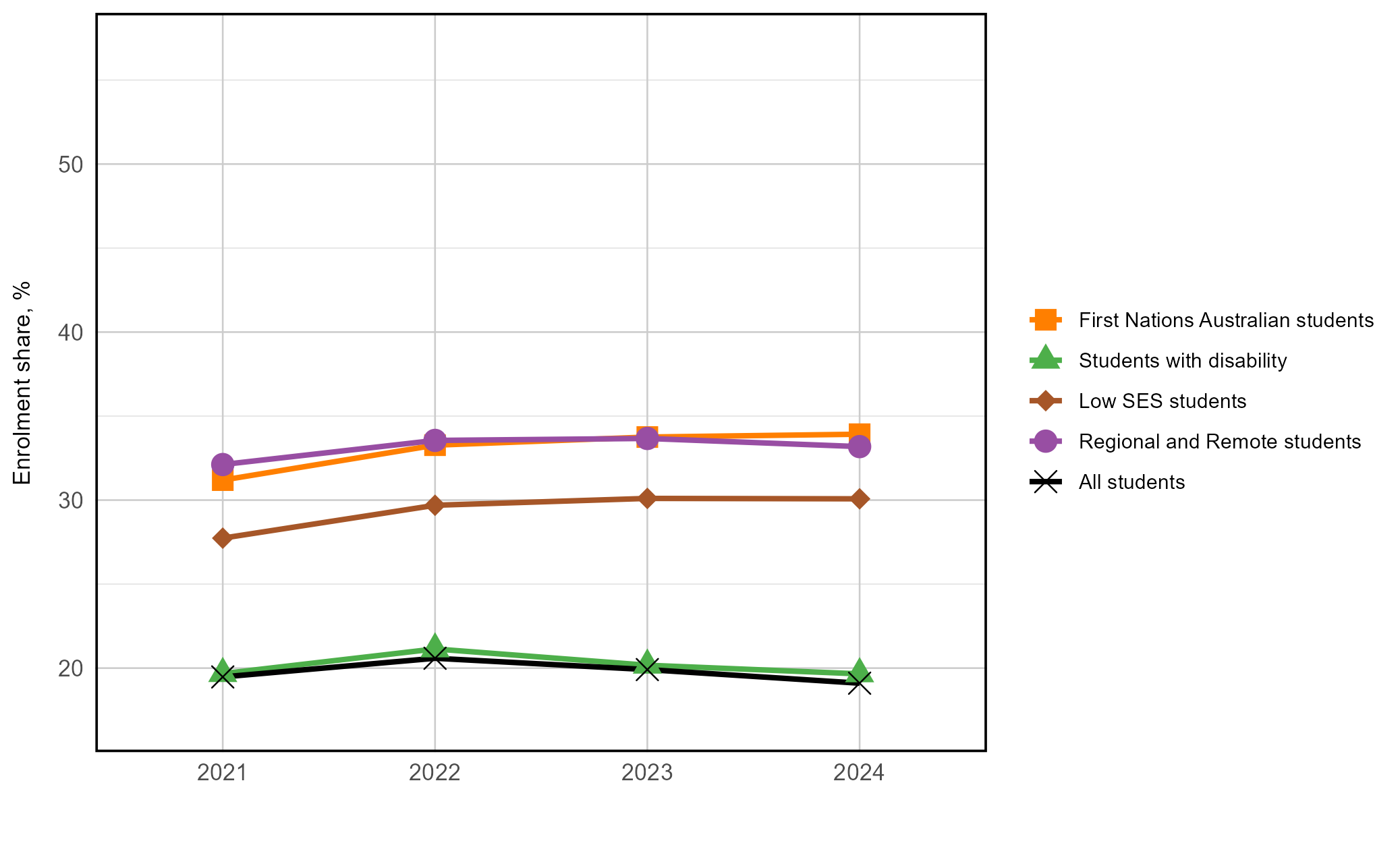
For most of these groups, institutions with higher equity participation also tended to have higher external enrolment shares, suggesting online study plays an important role in widening access.
Report author and ACSES Data Program Director, Associate Professor Gemma Cadby, said online education allowed students to study from any location and manage competing demands, such as employment or caring responsibilities.
But this flexibility comes with trade-offs.
“External students reported being more satisfied with overall educational experience, teaching quality, and student support services,” Associate Professor Cadby said.
“At the same time, they experienced a lower sense of belonging, less satisfaction with peer engagement, and a greater negative impact of paid work on their study.”
The report also confirmed the availability and uptake of external study options varied considerably across universities.
While some universities provide limited external attendance options, others have extensive online offerings, often in partnership with third-party providers.
The full report, Mode of attendance in Australian higher education: Analysis of 2024 data (2026 update), is now available on the ACSES website.